
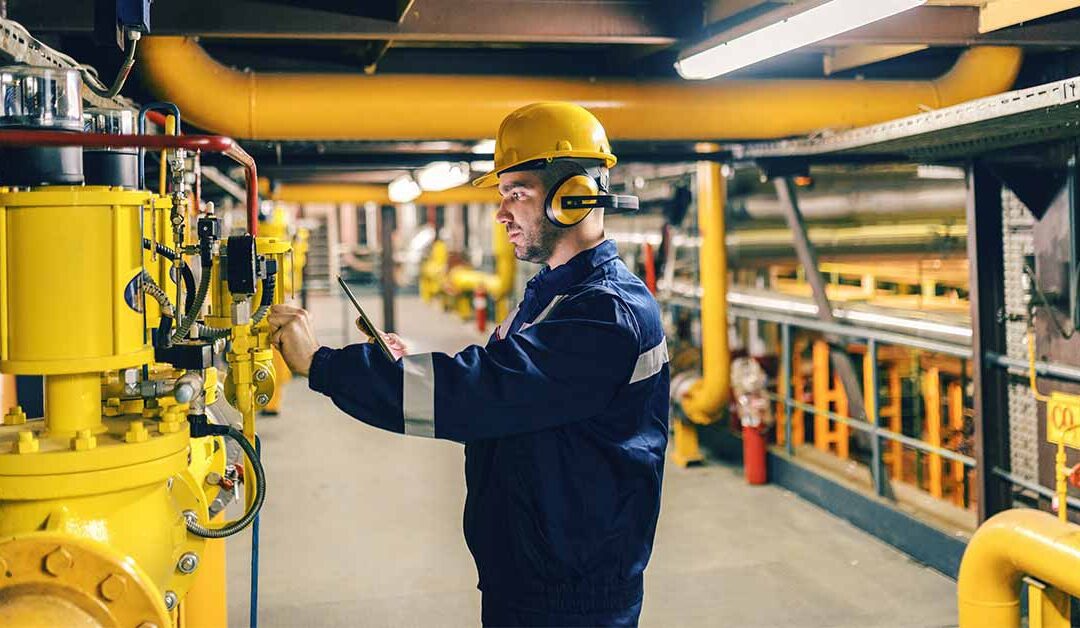
Industrial sites carry risk. It’s built into the operation. Consequently, learning about the best ways to protect industrial facilities is likely front of mind.
This guide outlines the best ways to protect your premises, people and assets from the main risks to industrial site security. In summary, these include theft, arson, and vandalism.
As experts in the field of monitored security, this guide offers proven methods that reduce theft, vandalism, and downtime.
At a glance
To protect industrial sites effectively, combine CCTV monitoring, access control, physical barriers, smart lighting, and secure storage. The most successful sites integrate these systems to detect and respond to threats before they cause disruption or loss.
What are the best ways to protect industrial plants?
Expensive materials, tools, vehicles, and machinery are often left exposed, and many sites go unstaffed at night or over weekends.
Criminals don’t guess. They target known vulnerabilities: back gates, fuel tanks, cable trays, or poorly lit yards.
As a result, deploying the right security systems is critical to protect industrial sites. If you are looking to improve the security measures deployed in your industrial facility, continue reading this article to learn more.
1. Use CCTV monitoring to detect threats fast
CCTV is essential. But monitored CCTV is what really makes the difference.
Operators watch your site in real time. When cameras detect movement:
- They view the feed instantly
- They issue a live audio warning
- They call the police or your keyholders if needed
This turns a passive system into an active response.
Use it to protect:
- Yards with parked HGVs
- Fuel and gas storage areas
- Cable reels or copper piping
- Site cabins and offices
Related reading: How does monitored CCTV improve industrial site security?
2. Secure your perimeter properly
Fences keep honest people honest, and slow down those with bad intentions.
To maximise perimeter security:
- Install anti-climb fencing or fence toppings
- Use locked gates with keypad or fob access
- Fix damaged or leaning panels immediately
- Add perimeter beams that trigger alerts
Pair this with CCTV and lighting for full coverage.
3. Restrict access with smart entry systems
Letting the wrong person onto your site, even by accident, can be costly.
Install systems that:
- Log entries and exits
- Restrict zones based on job role
- Limit access outside working hours
- Use ANPR or keycards for vehicles and staff
This works just as well for a 3-person unit as it does for a 300,000 sq ft warehouse.
4. Lock down tools, plant, & materials
What’s left lying around often disappears.
Secure storage for:
- Power tools
- Building materials
- Fuel and chemicals
- Mini diggers, forklifts, and telehandlers
Best practice:
- Store gear in lockable containers
- Install tracking on plant and vehicles
- Park machines away from fences
5. Improve visibility with targeted lighting
Criminals hate being seen. Strategic lighting makes them think twice.
Best locations for lighting:
- Entrances and exits
- Loading bays
- Fuel and waste areas
- Fence lines and blind spots
Use motion-activated LEDs or timed floodlights. Make sure your lighting supports camera clarity, too.
6. Train staff to spot & report risks
Your team is the first line of defence during working hours. Make sure they:
- Know who’s allowed on site
- Report broken gates or lights
- Lock up containers and outbuildings properly
- Escalate suspicious activity right away
Training them on the importance of logging and reporting suspicious events is a significant factor in protecting warehouses, factories, and manufacturing plants.
7. Keep a clear site security plan
It sounds simple, but many sites don’t have one.
Your plan should cover:
- Who gets contacted during a break-in
- Which areas are high risk
- What happens if the main gate is breached
- When systems are tested and reviewed
Document it. Share it. And keep it updated.
Factors to consider
- Incident history: Where have things gone wrong before?
- Lighting coverage: Are blind spots properly lit?
- Equipment value: What’s worth stealing? What’s easy to grab?
- Response times: Can police or patrols reach the site quickly?
- System integration: Do your cameras, alarms, and access controls work together?
Summary: The best ways of improving industrial site security
Most security failures happen because of one small gap — a broken lock, a forgotten gate, or an unmanned camera feed.
Fix those gaps. Watch your site when no one’s there. Lock things away. And respond fast.
That’s what makes the difference between a secure site and a soft target.
Looking to improve site security?
Not sure where to start?
Book a site review and we’ll show you how to protect your operation with a mix of smart technology and real-world experience.
FAQs
There’s no single fix. The best approach combines monitored CCTV, strong perimeter fencing, access control, and proper lighting. Together, these systems reduce vulnerability and help stop threats before they cause damage.
Is CCTV monitoring worth it for a small industrial site?
Yes. Even small sites benefit from having a trained operator watching out of hours. With just a few cameras, you can cover key zones like entrances, fuel tanks, and storage units — all without needing on-site guards.
How do I protect materials stored outdoors?
Use locked containers, cage off high-value stock, and light the area properly. Position cameras to cover the zone and set alerts for after-hours movement. If something triggers an alert, a live operator can respond right away.
Can I use access control on a yard without gates?
You can install barriers, temporary fencing, or ANPR systems for vehicle access. Even in open layouts, basic access control improves awareness of who’s entering — and when.
What’s the best first step if my industrial site has no security at all?
Start with a risk assessment. Identify high-value items, weak entry points, and past incidents. From there, a monitored CCTV system is often the most affordable and effective first layer of protection.