
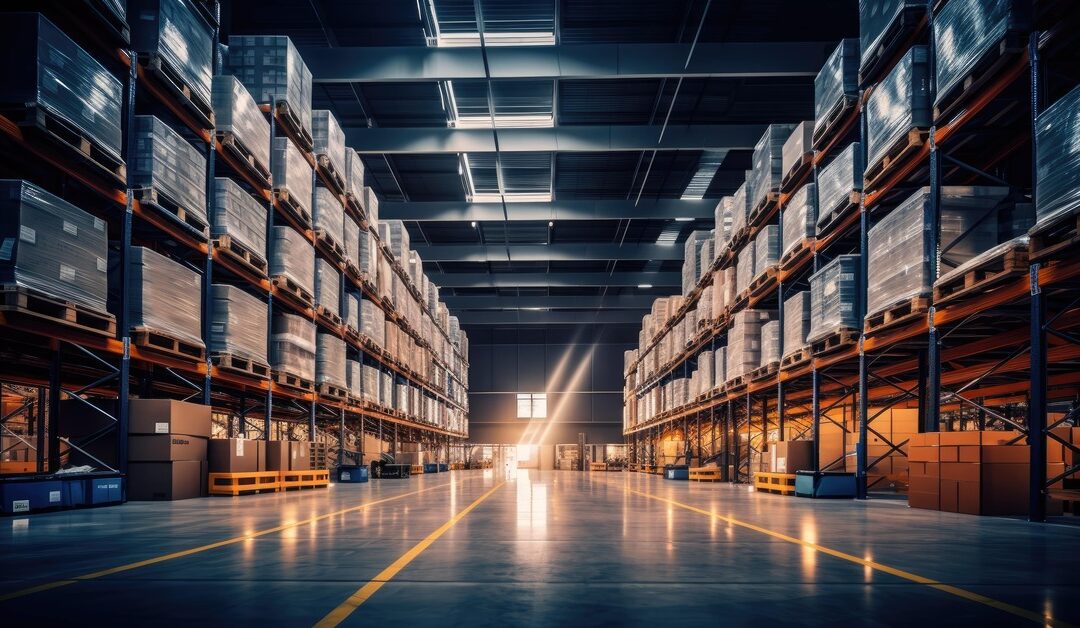
Warehouses might seem secure during working hours, but what happens when the last shift clocks off? Criminals see opportunity, lots of it. Large stock volumes, limited footfall at night, and slow response times all make warehouses attractive targets. So, why do thieves target warehouses?
Read on to learn more.
Key takeaways (TL;DR)
- Thieves target warehouses because they’re remote, stocked with valuable goods
- Many, particularly smaller operations, are often under-protected at night
- Without surveillance camera monitoring or on-site security, sites become an easy target
The 5 main reasons warehouses are targeted by thieves
Now, let’s examine the key factors that lead thieves to target these sites.
In summary, they are:
- Weak after-hours security
- Valuable goods stored in bulk
- Remote or industrial estate locations
- Delayed discovery of break-ins
- Gaps in physical security measures
Let’s get started.
Weak after-hours security
Another reason why thieves target warehouses is that many unfortunately have poor after-hours security. Once the working day ends, most warehouses go dark. Relying on static cameras or perimeter alarms alone won’t cut it.
Thieves exploit gaps in your setup:
- No on-site staff or guards
- Unmonitored alarm systems
- Blind spots around loading bays or access doors
- Predictable routines
This makes it easy for intruders to plan and strike when they know no one is watching.
It only takes a few minutes to lose thousands in stock, and weeks to recover from the disruption.
And, as many smaller operations can’t afford guards, they are targets.
However, if you didn’t know already, there is an oven-ready solution: remote CCTV monitoring for warehousing operations. Cameras detect threats, and operators warn intruders they have been spotted. Furthermore, you’ll also be delighted to know that the cost of CCTV monitoring for warehouses is a tiny fraction of a guard’s salary. Cost-effective overnight security.
Valuable goods stored in bulk
A key reason why thieves target warehouses is they store stacks of rich picking for crooks. Warehouses contain high volumes of products, often ready for distribution.
Thieves see this as a goldmine.
They’re not looking for one-off items; they want quantity. And warehouses give them that:
- Electronics, tools, and machinery
- High-value retail stock (trainers, alcohol, beauty products)
- Copper cables, fuel, and batteries
- Laptops, mobile devices, and branded kit
The more they can carry, the higher their return, and the more damage they leave behind.
These hits can be well-organised, often involving vehicles, cutting equipment, and inside knowledge.
Remote industrial estate locations
Warehouses are usually located on the edge of towns or in low-traffic areas. It’s perfect for delivery logistics, and unfortunately, ideal for break-ins.
Criminals prefer isolated targets:
- Fewer passersby or witnesses
- Delayed police response due to the location
- More time to escape with goods
If there’s no CCTV coverage or active deterrents, such as monitored surveillance, in place, your warehouse becomes a low-risk, high-reward option.
And when neighbouring units also lack security, the whole area becomes a target hotspot.
Delayed discovery of break-ins
Without monitoring, a warehouse break-in might not be discovered until the next morning, or later if it happens on a weekend.
During that window:
- Intruders may come back multiple times
- Rain or weather may damage exposed inventory
- Insurance claims get more complex
Quick detection is critical. That’s why monitored CCTV changes the game — it shortens the window from hours to seconds.
And faster response means more chance of recovery, prosecution, and prevention of future attacks.
Gaps in physical security measures
Even basic weaknesses can open the door to crime. Thieves look for the path of least resistance. That’s why you need to constantly review and improve security for your warehouse. Don’t let thieves steal a match on your efforts to improve site security.,
Common weak points include:
- Old or poorly maintained locks
- Lack of motion lighting or visible deterrents
- Fences that are easy to scale or cut
- No audio deterrents or on-site speakers
Upgrading physical and visual security reduces appeal and increases the risk for would-be intruders.
Pairing these with monitoring makes the deterrent even stronger.
Factors to address in your warehouse security plan
- Map and secure high-value stock zones
- Ensure camera coverage on blind spots and external areas
- Upgrade alarm systems and integrate with CCTV
- Use live monitoring to respond instantly
- Reassess shift changes, patrols, and emergency contacts regularly
Security should grow with your operations, not lag behind them.
Understand the risk, stay one step ahead
Thieves target warehouses because they see gaps. Your job is to close them. With monitored CCTV, smart alerts, and better planning, your site becomes one they’ll avoid, not exploit.
What impact would it have if your warehouse were broken into and stock stolen?
Why do thieves target warehouses? Quick summary
Warehouses are prime targets for criminals, especially after hours when physical security is weakest and valuable stock sits unguarded. From remote locations to unmonitored systems, thieves exploit gaps that can be easily fixed with the right approach.
Key points:
- Warehouses are often remote, with high-value goods stored in bulk
- Poor after-hours security makes sites vulnerable to organised theft
- Break-ins may go undetected for hours without live monitoring
- Physical security gaps, like weak locks and blind spots, are common
- Remote CCTV monitoring offers fast, cost-effective protection
Want to stay off the radar of warehouse thieves?
Let’s build a security setup that keeps criminals out and your operations running.
Get in touch today to talk to an expert about your options.
FAQs
Yes. Warehouses that store high-value items (electronics, fuel, metals) or are in isolated industrial estates face a greater threat. Facilities without CCTV surveillance or active deterrents are often first on a thief’s list. However, as we have covered in this article, CCTV monitoring offers the perfect solution.
How do thieves plan warehouse thefts?
Some are opportunistic, but many break-ins are planned. Intruders may visit the site days before, looking for patterns, weaknesses, and entry points. Unmonitored CCTV, no cameras or visible alarms make their job easier. As a result, the message is clear: invest in security.
Can monitored CCTV stop a thief from breaking into a warehouse?
Absolutely. Live surveillance allows trained operators to issue real-time warnings, alert police, and dispatch keyholders, often before the intruders get inside. It’s one of the most effective deterrents available. And, it is so much cheaper than employing guards.
Do most break-ins happen overnight?
Typically, yes. Thieves strike when they know staff are gone and security is lowest. Weekends and public holidays are especially risky if no live monitoring or CCTV cameras are in place. Again, this is a key reason to review your security systems and invest further if you feel you’re site could be targeted.
Is it expensive to secure a warehouse properly?
Not when compared to the cost of a break-in. Monitored CCTV is more affordable than manned guards and reduces losses, downtime, and insurance claims. You’ll usually save money in the long run when compared to the cost of guarding.